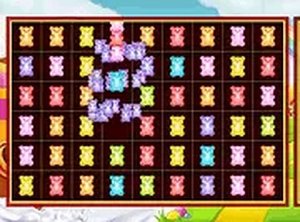
Core Matching Mechanics
In Candy Bear Tile Swap, players slide entire rows of brightly colored bear-shaped tiles either left, right, up, or down. The goal is to line up three or more identical bears in a straight row, either horizontally or vertically. When a match forms, those tiles vanish and the player earns points. New tiles then drop into place, potentially creating chain reactions that reward careful planning. The controls respond instantly to mouse clicks or finger swipes, making each move feel precise and satisfying.
Time-Based Level Structure
Each round introduces a countdown timer that adds a light layer of pressure. Players must think quickly and act efficiently to clear as many matches as possible before time expires. The timer is generous enough to allow thoughtful moves but short enough to keep the action moving. Completing a level requires meeting a target score, which increases gradually as players progress. This structure encourages repeated attempts to improve both speed and accuracy.
Visual Design and Accessibility
The game presents a clean, colorful interface with large, easily distinguishable tile graphics. Each candy bear features a distinct hue and subtle facial expression, making the board easy to scan at a glance. The background remains uncluttered, helping players focus on the puzzle. Text and buttons are sized for comfortable use on smaller screens, and the overall aesthetic avoids any distracting animations or loud effects. This thoughtful design ensures the game is approachable for children and adults alike.
Cross-Platform Play
Candy Bear Tile Swap runs entirely in a web browser, requiring no installation or account creation. It adapts smoothly to different screen sizes, whether on a desktop monitor, tablet, or smartphone. The touch controls feel natural on mobile devices, while mouse-based sliding works equally well on computers. This flexibility means players can enjoy a quick round during a break at work or relax with a longer session at home, with their progress saved automatically between visits.
Skill Development Through Play
Regular play helps build several cognitive skills. Pattern recognition improves as players learn to spot potential matches across the board. Planning ahead becomes second nature when considering how a single slide might trigger a cascade of matches. The time limit also trains quick decision-making under mild pressure. Unlike some puzzle games that rely on luck, success here depends on observation and strategic thinking, making each victory feel earned.










Comments
0 comments